
Custom Metal Railings in West Hartford: What Local Homeowners Choose
West Hartford homeowners choose black powder coated steel railings. For front steps and porches, the common pick is a simple ornamental design with straight pickets and scrollwork. Inside the home, the trend has moved toward clean railings with vertical pickets. Cable and stainless steel show up in newer builds and full renovations. Almost everything gets a black powder-coated finish, because black works with the brick, granite, and painted trim that most homes here already have.
That pattern is not a coincidence. It comes straight out of the kind of houses in West Hartford. Below is what people actually pick, and why those choices tend to hold up around here.
At The Iron Shop, a custom metal fabricator in West Hartford, we build railings by hand in our own shop here in town, so this is drawn from the work that comes through our Albany Avenue door.
Why West Hartford homes point toward iron
Much of the housing stock here was built in the early and mid twentieth century. Colonials, capes, Tudors, older Victorians, and mid century ranches make up most of what you see architecturally when driving around Elizabeth Park, the West End, or Bishops Corner.
Two things about those houses shape railing decisions.
First, the front entrances are often masonry. Granite, brownstone, brick, and poured concrete steps are everywhere in older neighborhoods. Metal railings anchor into masonry well and stay put. Wood railings mounted to stone tend to loosen and rot at the base over time.
Second, the architecture already has a formal, traditional face. A painted steel railing with a modest ornamental profile sits comfortably against a colonial or a Tudor. A bulky vinyl or pressure treated wood rail usually does not, especially at the front of the house where everyone sees it.
What people often choose, by project
| Project | Most common choice |
|---|---|
| Front steps and entry | Black powder coated steel, straight balusters, simple scroll or none |
| Porch and landing | Ornamental steel, matched to the house trim, powder coated |
| Interior staircase | Plain vertical balusters or thin horizontal bars, black or dark bronze |
| Deck and balcony | Powder coated steel or aluminum, sometimes cable for a clear view |
| Basement or bulkhead | A single plain grab rail, function over looks |
Front step and porch railings
This is the most requested project type we get from West Hartford homeowners. Usually the old railing has rusted at the base, gotten loose in its mounting, or was never there at all - and the steps feel unsafe. People tend to pick something simple. A clean profile with pickets reads correct on a colonial and does not fight the house aesthetically.
Scrollwork still has a place, but we counsel showing restraint. A single scroll detail or a decorative top rail is far more common now than heavy ornate patterns.
Interior stair railings
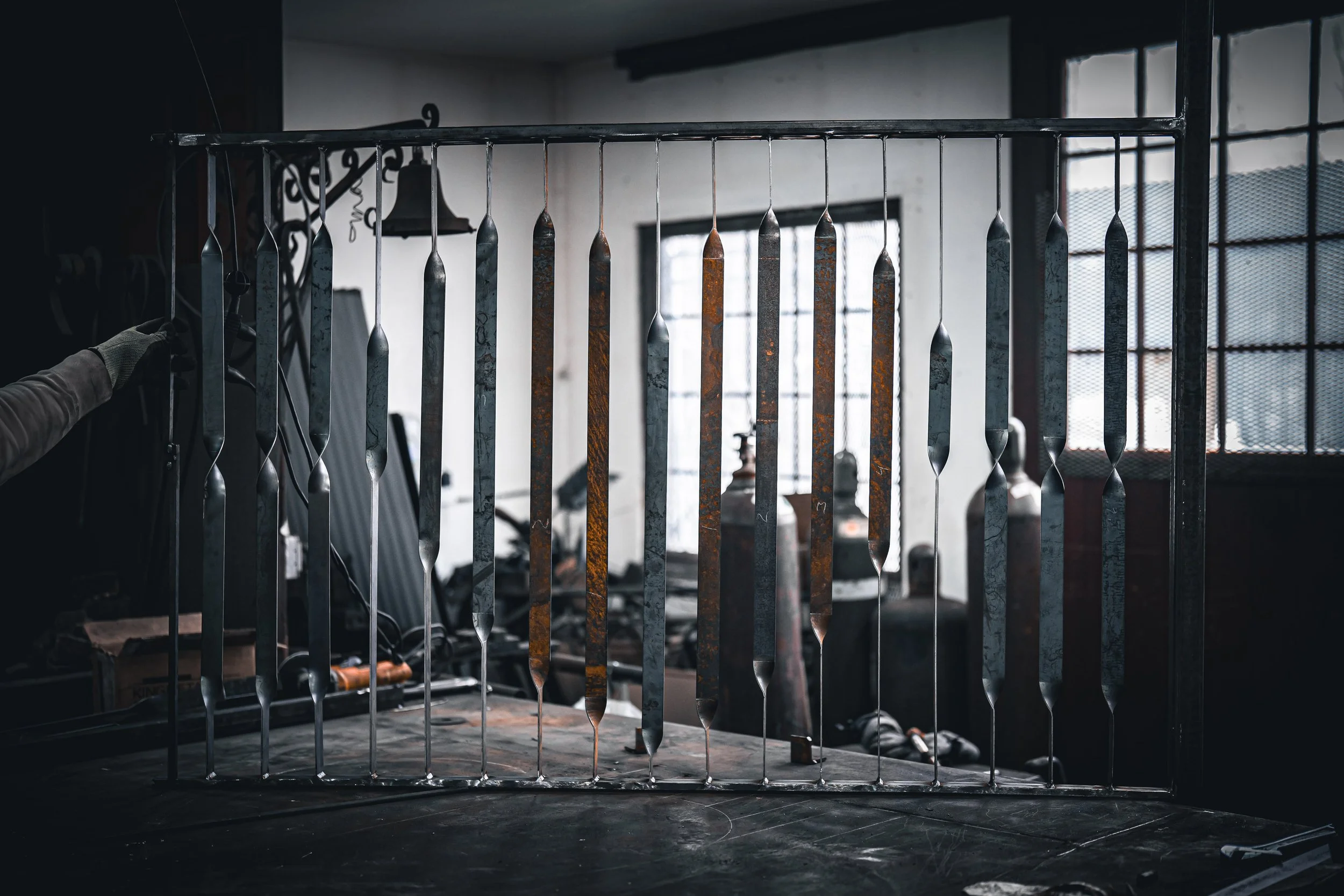
Inside, taste has shifted. Homeowners renovating a staircase often want to remove a dated ornate railing and replace it with something quieter and more modern. Plain vertical pickets in black are the default request. Modern, horizontal bar designs come up in homes that have been opened up and modernized.
We see homeowners and designers keeping a wood top rail and using metal below it, which keeps the warmth of wood while updating the look. If you are working through those decisions, our guide on how to choose the perfect staircase railing for your Connecticut home covers the main options.
Deck, patio, and balcony
Out back, priorities change. People want a view and weather resistance, and prioritize this more than ornamentation. Modern cable railings and thin profile designs come up in deck discussions because they block less of the sightline. Whatever the style, the finish matters more outside than the design does - powder coating is our preferred material for any steel that lives outdoors.
Materials people actually pick
Steel is the most common. Most railings that homeowners call wrought iron are actually fabricated from steel and finished to get that classic black iron look. True wrought iron is a specific material that is rarely used today. We also work with stainless steel and aluminum, and will tell you exactly what your railing is made from and why we chose that material. Our post on what wrought iron actually is explains the difference in plain terms.
Aluminum gets chosen when weight is a concern or for some deck applications. It costs less than stainless and does not rust, though it is softer than steel.
Stainless steel and cable systems show up in contemporary renovations and newer construction. These materials cost more than steel, and suit modern house aesthetics.
Why black powder coating dominates here
Two reasons, one practical and one visual.
The practical one is Connecticut weather. Outdoor metal here goes through freeze and thaw cycles, road salt, and months of moisture. Bare steel left outside will rust. Powder coating is a dry finish that resists chipping, fading, and corrosion well, and for exterior railings it is often applied over galvanizing for a second layer of protection. It is not maintenance free. Any coating can eventually chip and need a touch up, especially where a shovel or a snowblower hits it. But it holds up far better than paint alone.
The visual reason is simpler. Black goes with granite steps, red brick, white trim, and dark shutters, which describes a very large share of West Hartford houses. It is the safe choice, and it is usually the right one.
Bronze, dark gray, and hand applied patinas come up when a design warrants it, delivering a warmer or more custom look. Color choices abound and all are available. Black is just what most people land on because it disappears visually and complements most home styles.
The mounting question nobody asks about
If your steps are granite, brownstone, or brick, how the railing anchors into them matters as much as the design. Masonry needs to be drilled and set properly. Done poorly, the anchor works loose over a few winters, or worse, the stone cracks.
There is a real difference between a custom fabricator making a railing for you and a stock “store-bought” railing screwed into place. We measure the steps, account for the material we are mounting into, and build the railing to match the actual rise and angle. Older West Hartford steps are frequently uneven or slightly out of square after a century of settling, and store bought solutions will not work or look right on them.
Repair and matching on older homes
Plenty of the ironwork on older homes is worth keeping. If the structure is sound and only the finish needs help, refinishing almost always costs less than replacing.
We also get asked to match designs. If a railing is being extended, or one section has failed while the rest is fine, we can replicate the existing design so the new work does not stand out. On a historic house, that matters. Our portfolio shows a range of what we have built and matched around the area.
Code and resale
Building code sets a required railing height and a maximum gap between pickets , so a child cannot slip through. Older railings often fail the spacing rule because it was different when they were installed. Some Connecticut towns may also require a permit for railing work.
This comes up frequently, much more than you would expect during a home’s sale. A loose or noncompliant front railing can get flagged in inspection. Replacing it is usually a small line item compared to what it can hold up at closing. We build railings to code and can handle this type of work, so it passes inspection and the sale goes through..
What it costs and how long it takes
A short front step handrail is a smaller job. A full interior staircase with detailed work is a larger one. The cost and overall fee depends on the length of the run, the design, the material, and the finish, and there is no honest way to quote it from a photo. We need to see drawings.
The installation of the railings is quick, often a single day for a standard staircase or entry. It is the design and the fabrication requirements that affect the calendar. Project turnaround is generally a few weeks depending on complexity. We give you a realistic timeline with your quote.
See it in person
Our shop and showroom is at 2575 Albany Avenue in West Hartford, open Monday through Friday, 8 am to 4 pm. You can stop in to look at finishes and sample work before you make any decisions. Call (860) 323-4430 or send your project details through our contact page, and we will come visit you, measure, and give you a firm price. If you want to know more about the shop itself, our story covers the history of the building and the work.
Frequently asked questions
What is the most popular railing style in West Hartford?
Black powder coated steel with a simple ornamental profile, used on front steps and porches. Inside, plain vertical balusters in black are the most requested.
Are metal railings better than wood for front steps here?
For masonry steps, usually yes. Metal anchors into stone and concrete securely and does not rot at the base. Wood mounted into masonry tends to loosen and deteriorate where it meets the stone.
Will a powder coated railing rust in Connecticut winters?
A properly finished railing holds up well against salt and moisture, and galvanizing under the powder coat adds protection. Powder coat is permanent, but chips from shovels or impact should be touched up so moisture cannot get underneath.
Can you match the ironwork already on my house?
Yes. We can replicate an existing design so a new or extended section matches, which matters on older and historic homes.
Do you work with contractors and designers, or only homeowners?
Both. We work directly with homeowners and also coordinate with builders, architects, and designers on larger projects.
Do you serve towns outside West Hartford
Yes. We work throughout Connecticut, with most projects in West Hartford, Farmington, Avon, Simsbury, and the surrounding towns.
