

Custom Porch & Front Step Railings in Connecticut
How We Can Bring Your Vision to Life
The Iron Shop designs, fabricates and installs custom porch and front step railings in steel, wrought iron, stainless steel or aluminum. Fill out the form or call to set up a field measurement.
SERVICING ALL OF
CONNECTICUT!

- 75+Years fabricating in Connecticut
- In HouseDesigned, fabricated, finished, installed
- To CodeResidential and commercial railings
- CTInstalled statewide
A porch railing is the first piece of metalwork anyone sees at your house, and it has to keep someone from falling every day it's there. These are the questions West Hartford homeowners ask us most before we build one, answered the way we'd answer them on your front steps.
Which porch railing material is best in Connecticut?
For most West Hartford porches, the honest answer is powder-coated steel or aluminum. Both stand up to road salt and freeze and thaw when they're finished properly, and both can be shaped to suit a Colonial, a Victorian or a modern build. Wrought iron and stainless steel have their place too. Here's how the four compare on a Connecticut porch.
| Material | Look | Upkeep | Salt & winter | Best for |
|---|---|---|---|---|
| Wrought iron | Traditional, hand-worked detail; heavy and solid | Touch-ups to the finish every few years | Rusts wherever the finish breaks | Historic homes and ornamental scrollwork |
| Steel | Classic or clean; the most design freedom | Low, with a proper protective finish | Strong performer when fully finished | Most porches and front steps |
| Aluminum | Lighter profiles, classic or modern | Lowest; it will not rust | Excellent beside salted walks | Low-maintenance homes |
| Stainless steel | Modern, brushed or bright | Occasional cleaning | Excellent; marine grade near the shore | Contemporary homes, cable or glass infill |
Our recommendation
For a porch that sees salted steps every winter, we usually build in steel finished for the weather. If you want the least upkeep possible, choose aluminum. If the house calls for scrollwork, choose wrought iron, finished to hold up outside.
What porch railing styles suit your house?
Start with the house, not a catalog. A porch railing reads as part of the architecture, so it should share the home's proportions and period.
- Colonial and Cape
- Square pickets, a flat or molded top rail and simple collars. Quiet, symmetrical and in proportion with the door.
- Victorian and Queen Anne
- Twisted balusters, scroll panels and finials. This is where wrought iron detail earns its place.
- Craftsman and bungalow
- Heavier posts, a wider top rail and straight vertical bars with generous, even spacing.
- Modern and farmhouse
- Horizontal bars, flat bar or square tube, cable or glass infill, usually in a matte black finish.
Not sure where your house lands? Send a photo of the front of your home with your request. We'll sketch a few directions at the site visit, and you approve a drawing before we cut any metal.
How high does a porch railing need to be?
Short answer
In most Connecticut homes, a porch guard must be at least 36" tall wherever the floor sits more than 30" above the ground below, with openings small enough that a 4" sphere can't pass through.
Handrails on your porch steps follow a separate rule, usually 34" to 38" measured from the stair nosing. Your town's building official has the final word, and older homes being sold or renovated are often asked to bring railings up to current code. We check every height and gap against code on the drawing.
What does a custom porch railing cost?
Every porch is different, so we price each railing after measuring on site rather than quoting a number over the phone. These are the factors that move the price:
- Length and layout
- Total linear feet, plus how many separate sections, corners and stair runs the porch needs.
- Material
- Aluminum and steel usually come in below stainless steel and hand-worked wrought iron.
- Design detail
- Straight pickets cost less than twisted balusters, scroll panels or custom infill.
- Mounting surface
- Concrete, brick, stone and wood decking each need a different anchor. A damaged step may need repair first.
- Finish
- Color, texture and the protective layers suited to the metal.
- Removal
- Taking out and disposing of an old railing.
Your written proposal lists all of it, so you can see where the money goes.
How Connecticut weather affects porch railings
Connecticut winters aren't easy on exterior metal. Road salt, freeze and thaw, and months of damp weather all work against a railing that sits outside year round.
Salt tracked onto porch steps settles at the base of the posts, exactly where water sits longest. Water that finds its way into a cracked weld or an open tube end freezes, expands and opens the crack further. Summer sun then fades and chalks a cheap finish.
A porch railing built for this climate has fully welded joints, capped tube ends, a finish suited to the metal and post anchors that shed water instead of holding it. Before you sign a quote, ask how the railing will be mounted and finished. It matters more than the picket pattern.
Good railings still need a little care. Rinse salt off the base of the posts in spring, look over the welds and anchors once a year, and touch up any chip in the finish before water gets underneath. Caught early, small problems stay small, and a well-built porch railing will look right for decades.
Recent Work
Recent porch and exterior railing projects
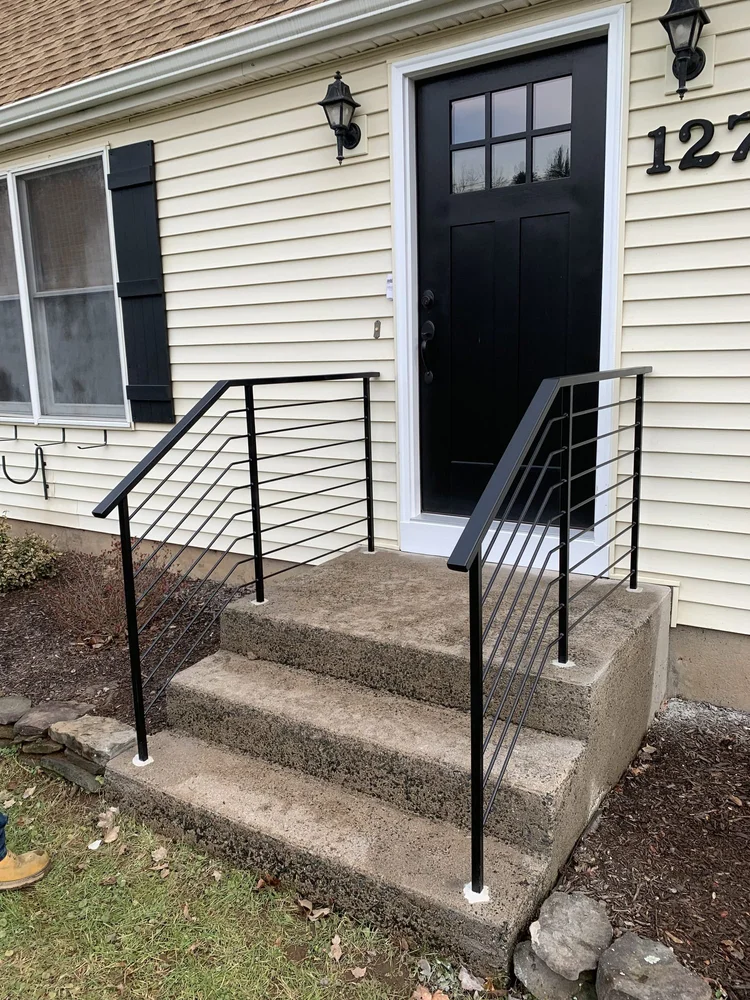
Modern horizontal-bar entry 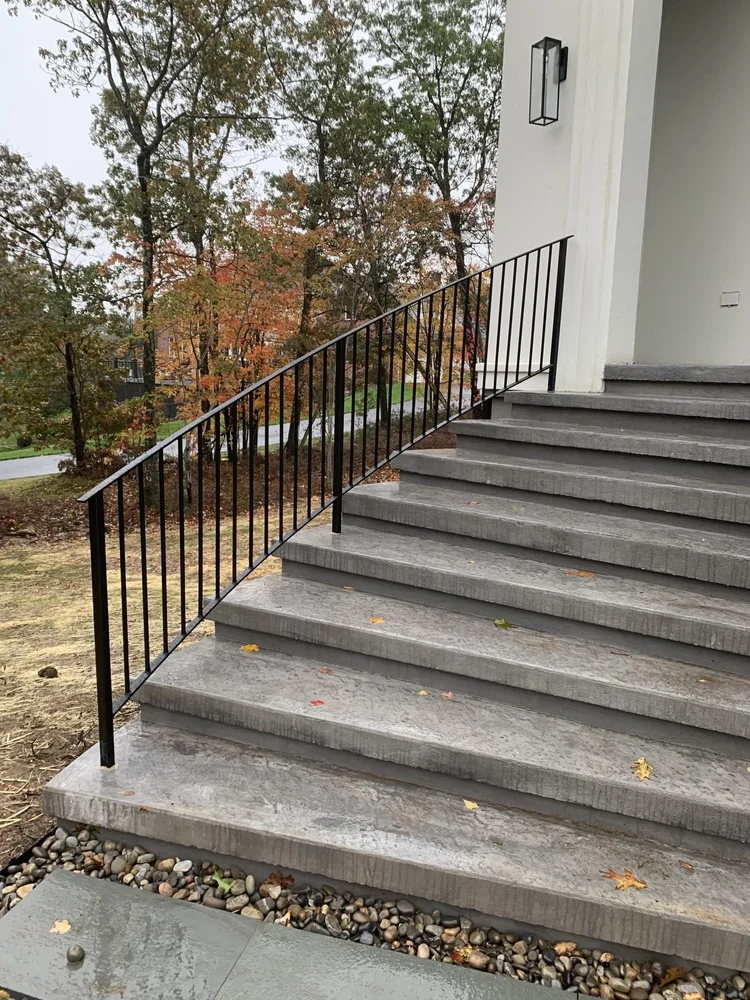
Front entry stair 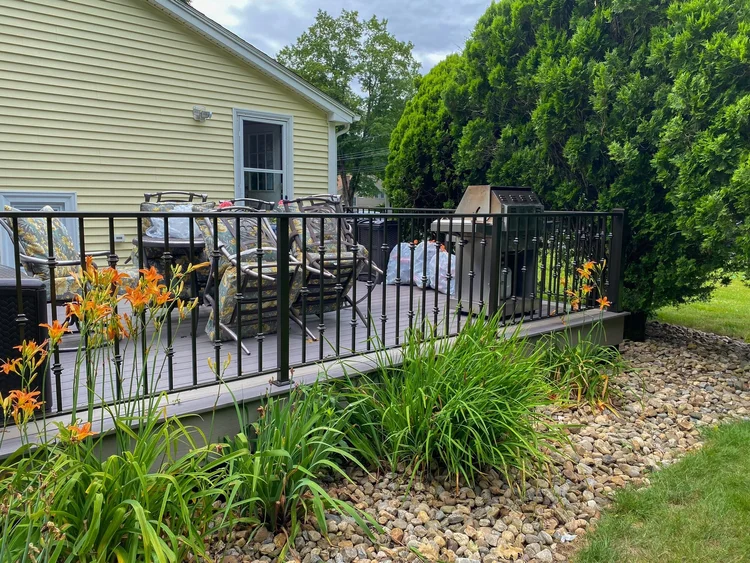
Deck railing with collars 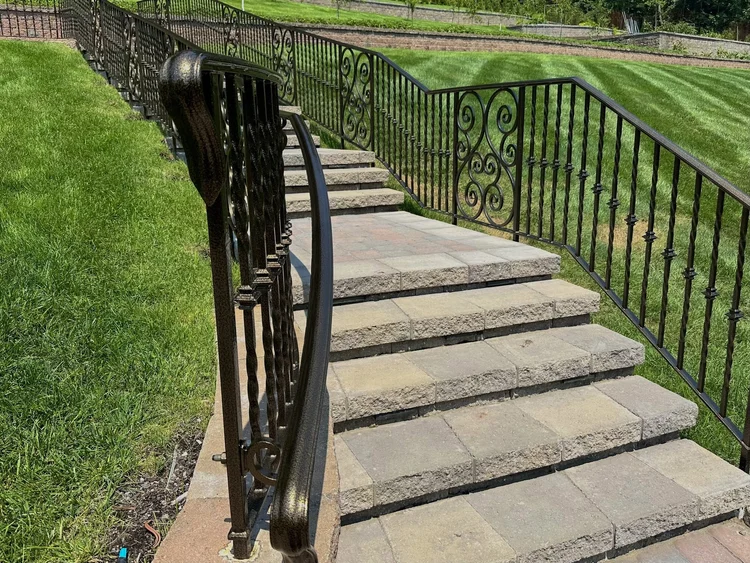
Curved garden stair 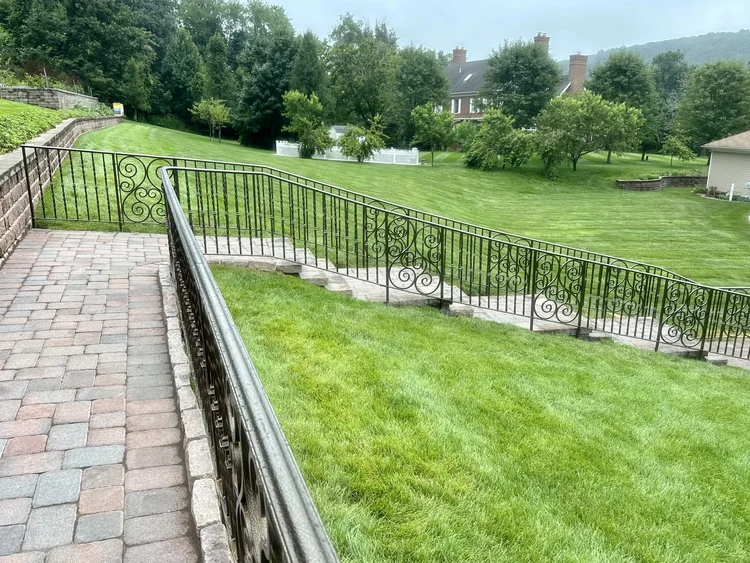
Scrollwork terrace railing 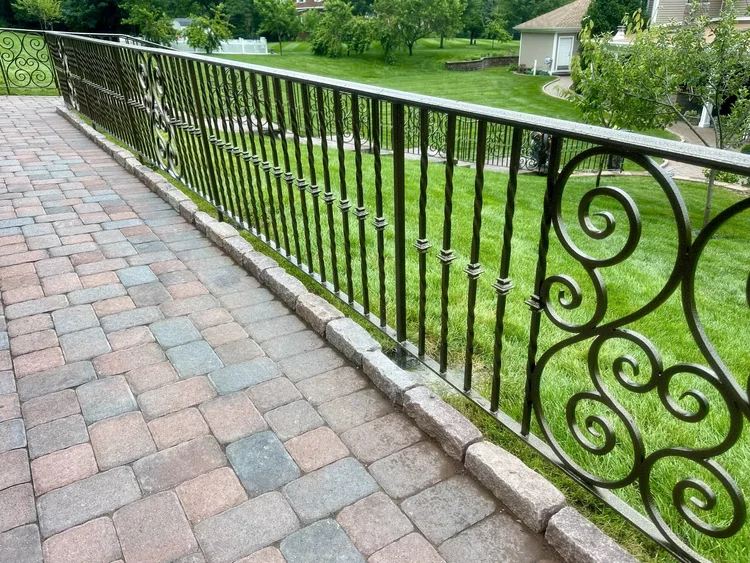
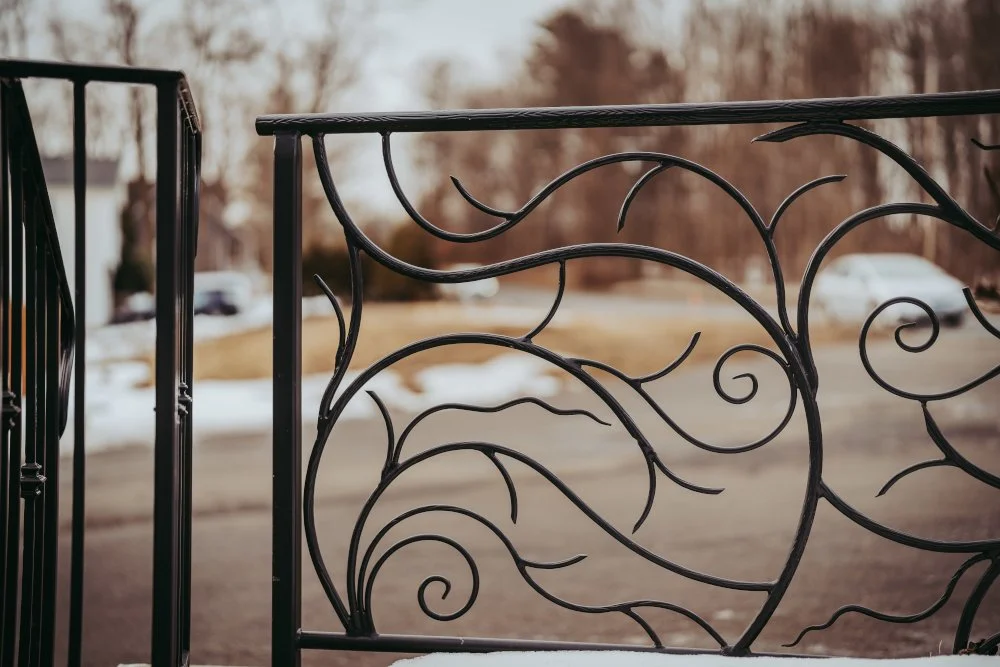
Twisted balusters & scroll panels 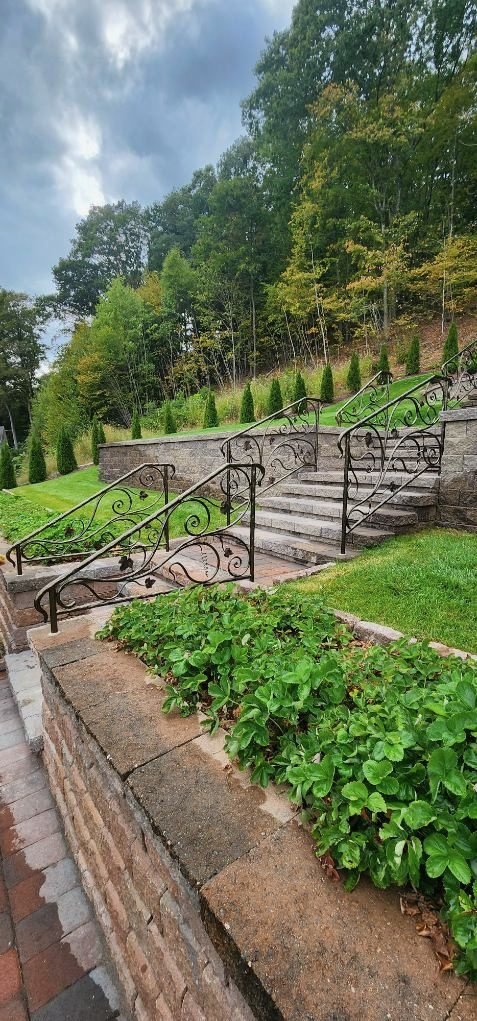
Terraced garden steps 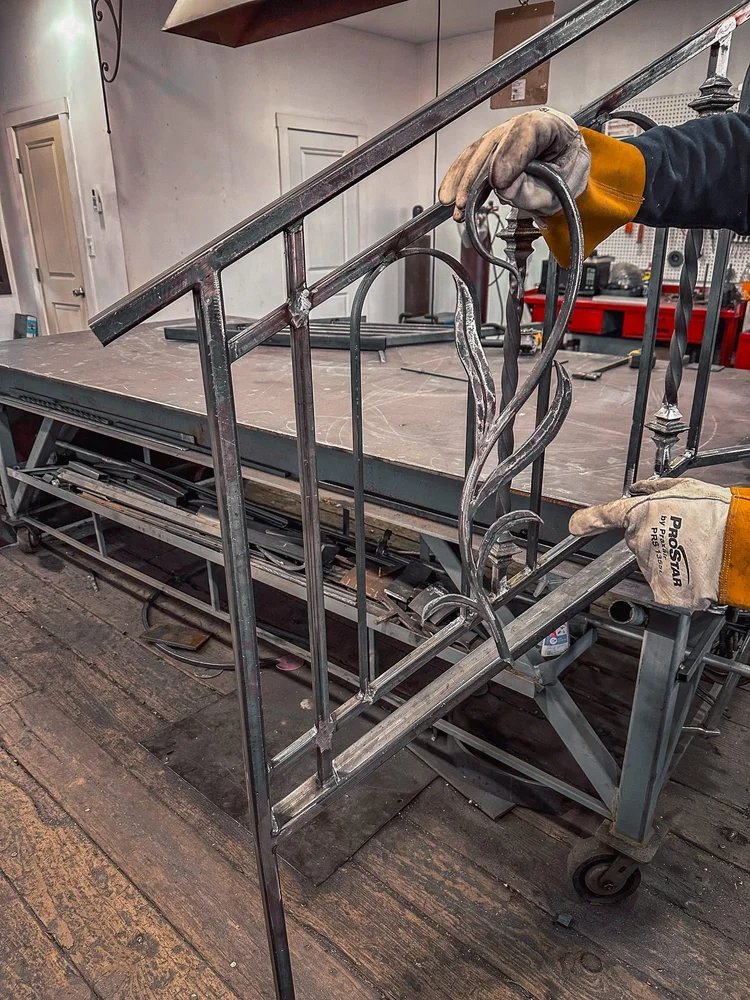
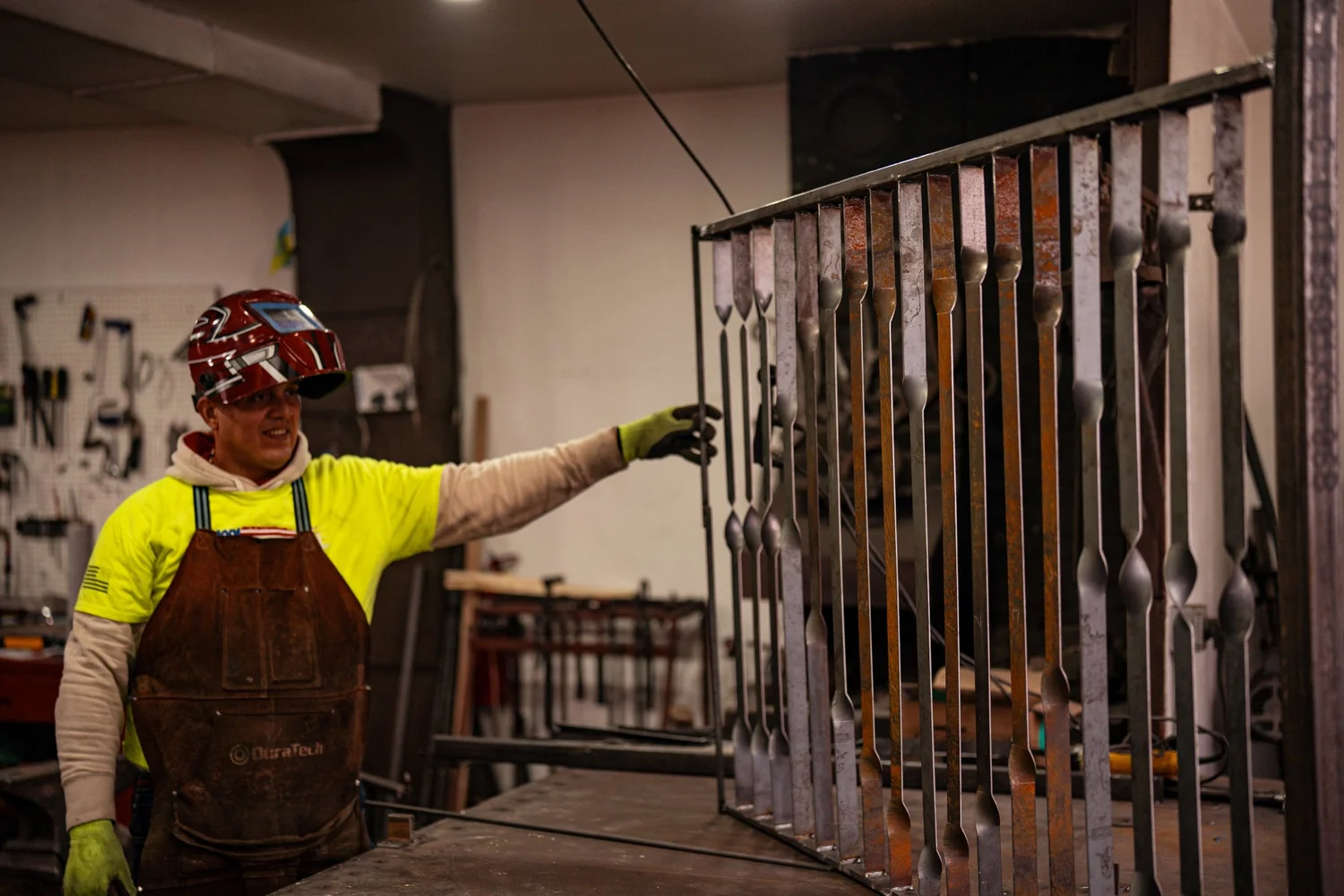
Custom infill panel · In the shop
Is it time?
Six signs you need a new railing
Connecticut winters aren't easy on exterior metal. Road salt, freeze and thaw, and months of damp weather all work against a railing that sits outside year round.
Rust that bubbles, flakes or stains
Surface rust can be treated. When it lifts the paint or leaves orange streaks down your steps, the metal underneath is losing thickness.
Posts that rock when you lean on them
If a post moves, the anchor or the concrete around it has failed. The railing can no longer hold the load it was built for.
Loose, bent or missing balusters
One missing picket is a gap a child can fit through. Several loose ones usually mean the rails they're welded to are failing too.
Cracked welds or broken joints
A hairline crack at a weld opens a little more every freeze. Once water gets inside a hollow rail, it rusts from the inside out.
It no longer meets code
Wide gaps between pickets, a guard that's too low, or a handrail you can't get your hand around. Older homes often fall short, and a sale or renovation inspection will flag it.
It doesn't suit the house anymore
You've renovated the entry, opened up the stair or changed the siding, and the old railing looks like it belongs to another house.
Before you sign a quote
How to spot a poorly built porch railing
Most porch railings look fine on install day. These four details decide whether it still looks fine after ten winters.
Posts bolted to crumbling steps
Porch steps take the most salt. A surface mount on spalled concrete or loose brick will pull free.
How we build it: we check the steps first and choose the mount to suit them.
Open tube ends and gappy welds
Water gets in, freezes and rusts the rail from the inside out.
How we build it: full welds, dressed smooth, with every tube end capped.
Paint straight over bare steel
Without a proper protective finish underneath, exterior steel starts rusting within a few winters.
How we build it: every exterior piece is finished for salt, freeze and thaw.
A guard that's too low or too open
Older porches often sit under 36" or leave gaps wider than 4". That fails inspection and isn't safe.
How we build it: heights and gaps checked against code on the drawing.
Our Process
From first measurement to final install
Four steps, one team. You get a written proposal before anything is built.
Tell Us About Your Project
Call, email, or fill out our form with photos of your porch and what you have in mind.
Field Measurement Visit
We visit your home, measure your porch and steps, and talk through material, style, and finish.
Written Proposal
Within two to three business days, you receive a written proposal with full project details.
Fabrication & Installation
Once approved, we build your porch railing in our West Hartford shop and install it on site.
Service Area
Where We Serve
Our shop sits at 2575 Albany Avenue in West Hartford, and most of our porch railing projects fall within about ten miles of that door.
- West HartfordShop
- Farmington
- Avon
- Simsbury
- Bloomfield
- Canton
- Hartford
Don't see your town? We likely still serve it. Get a free quote and we'll confirm.
FAQ
Porch railing questions, answered
Have a question that isn't answered here? Give us a call. We're here to help.
How much does a custom porch railing cost?
It depends on length, material, design and what the railing anchors to. We price every porch railing after measuring on site, so the quote reflects your porch rather than a guess.
How tall does a porch railing need to be in Connecticut?
In most homes, a porch guard must be at least 36 inches tall wherever the floor is more than 30 inches above the ground, with openings under 4 inches. Your town's building official has the final word, and we check every drawing against code.
What is the lowest-maintenance porch railing?
Aluminum. It won't rust, even beside salted steps. Stainless steel is close behind, and steel with a proper protective finish holds up well too.
Can you install a railing on brick or stone steps?
Yes. We check the condition of the steps first and choose a mount that suits brick, stone, concrete or wood. If a step is damaged, we'll tell you before we install.
How long does a porch railing project take?
Simple handrails can take a few weeks; full porch and stair railings take longer. We give you an estimated timeline with your written proposal.
Can you repair my existing porch railing instead?
Often, yes, whether we originally built it or not. If rust or loose posts are caught early, repair and refinishing can add years. We'll tell you honestly which makes more sense.
Do you serve towns outside West Hartford?
Yes. Most porch projects fall within about ten miles of our shop, including Farmington, Avon, Simsbury, Bloomfield, Canton and Hartford, and we travel further for the right project.
Porch Railings · West Hartford
Begin Your Porch Railing Project
Your project deserves personal attention. Book a site visit and we'll take it from there.